Lithium vs lead-acid batteries in golf carts
Is it worth upgrading to lithium? We cover the key pros and cons for fleets and private owners.
Why lithium is taking over
Lithium batteries deliver more energy density, faster charging and far less maintenance than traditional flooded lead-acid batteries. For both golf course fleets and private cart owners, the difference in day-to-day experience is dramatic.
While the upfront cost is higher, the total cost of ownership over five to ten years is consistently lower — thanks to a much longer cycle life and higher charging efficiency.
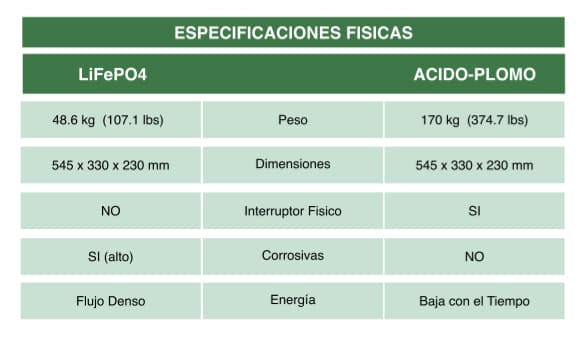
Full comparison: LiFePO4 vs Lead-Acid
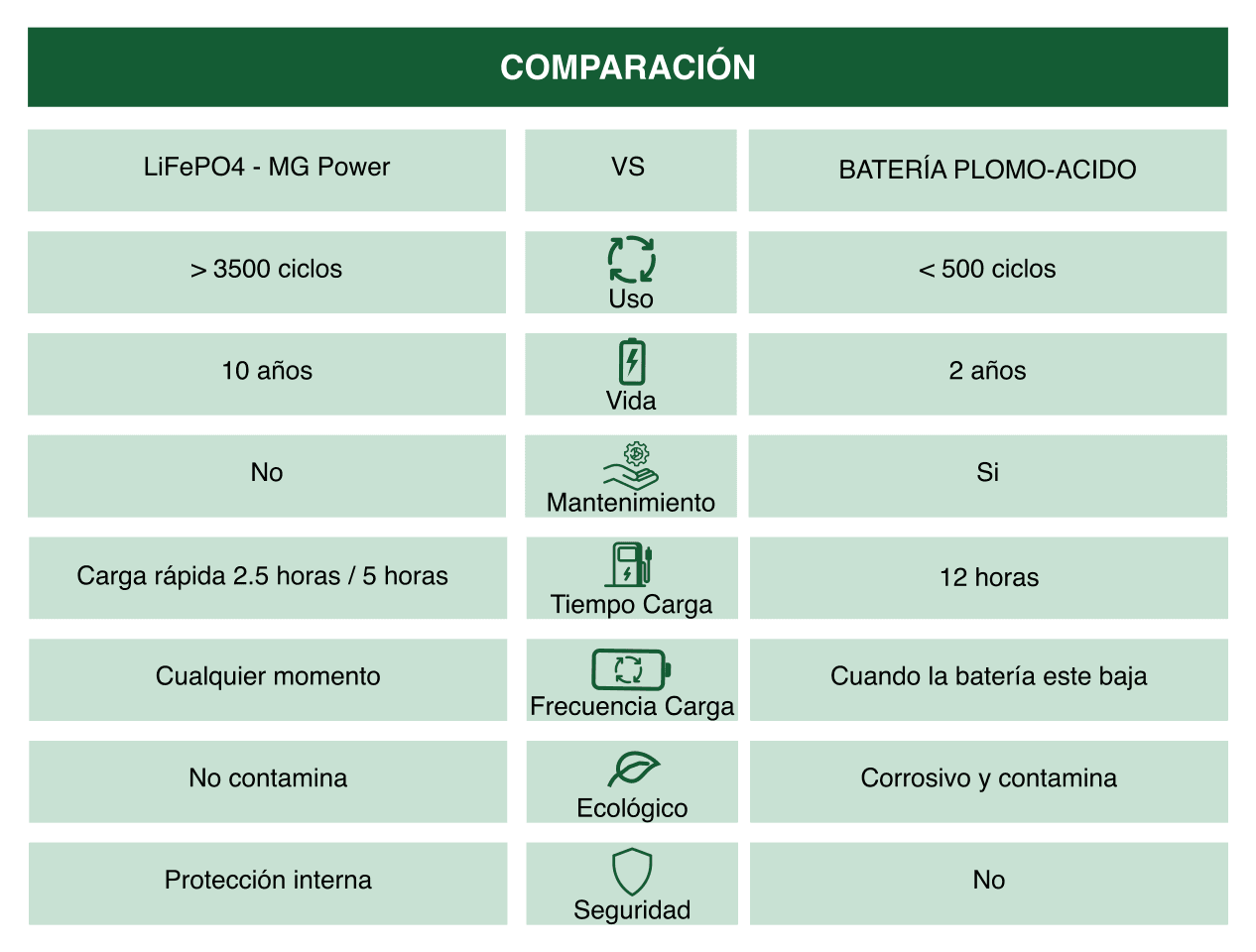
The table below captures the key differences at a glance. The standout figure: a LiFePO4 battery lasts over 3,500 charge cycles versus fewer than 500 for lead-acid. That translates directly into years of extra service life.
Charge time drops from 12 hours (lead-acid) to just 2.5–5 hours with a fast charger. Maintenance goes from monthly water refills and terminal cleaning to essentially zero.
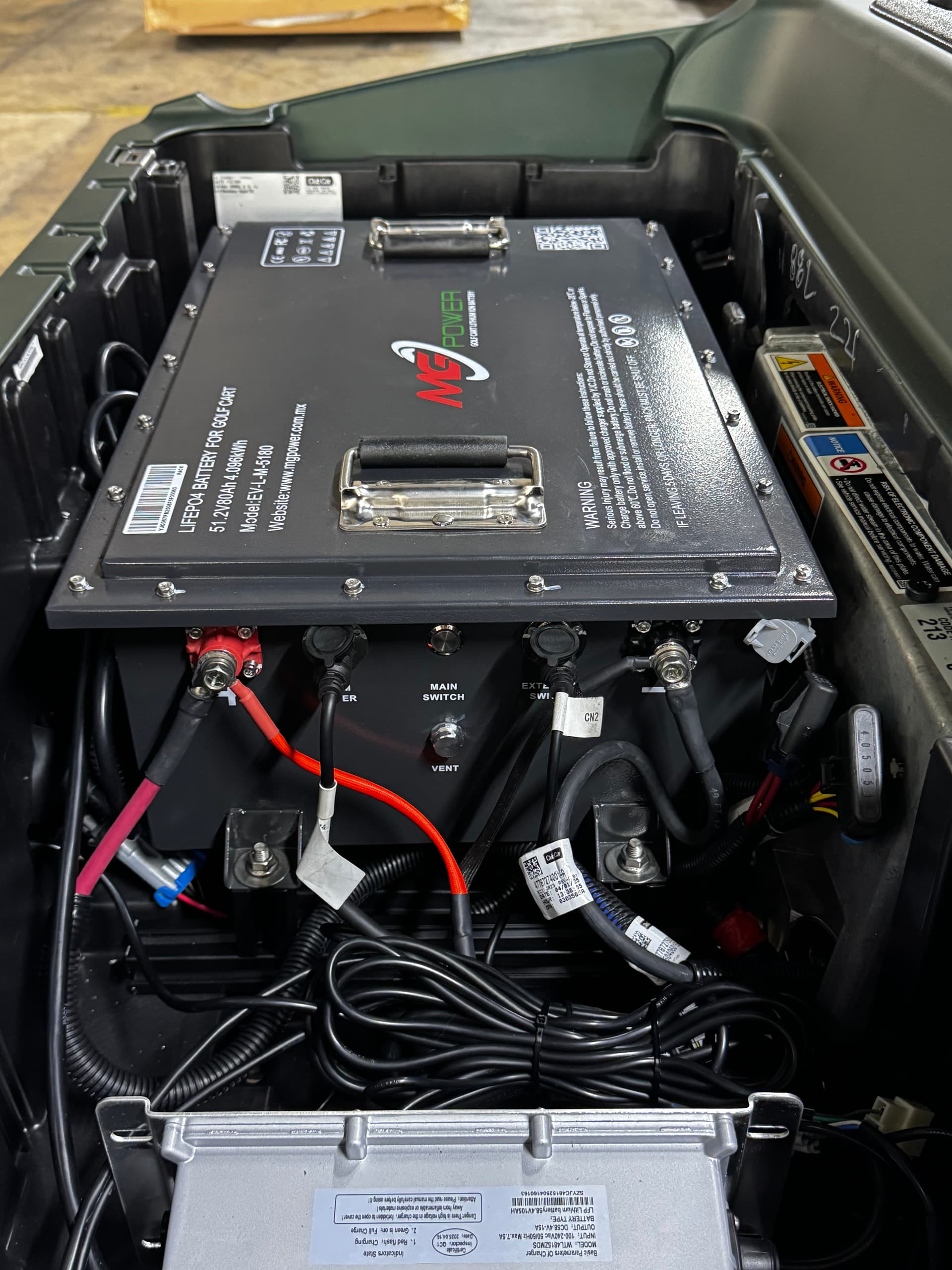
Safe certified connections: positive, negative, CAN, indicator and charger
The MG Power lithium kit ships with a purpose-built wiring harness designed for safety and simplicity. Each connector is dedicated: positive and negative terminals to the cart controller; a CAN bus port for digital communication with the gauge; an external push-button for safe on/off switching; and a dedicated LiFePO4 charger port.
This modular design eliminates wiring mistakes during installation and makes future service fast and straightforward.
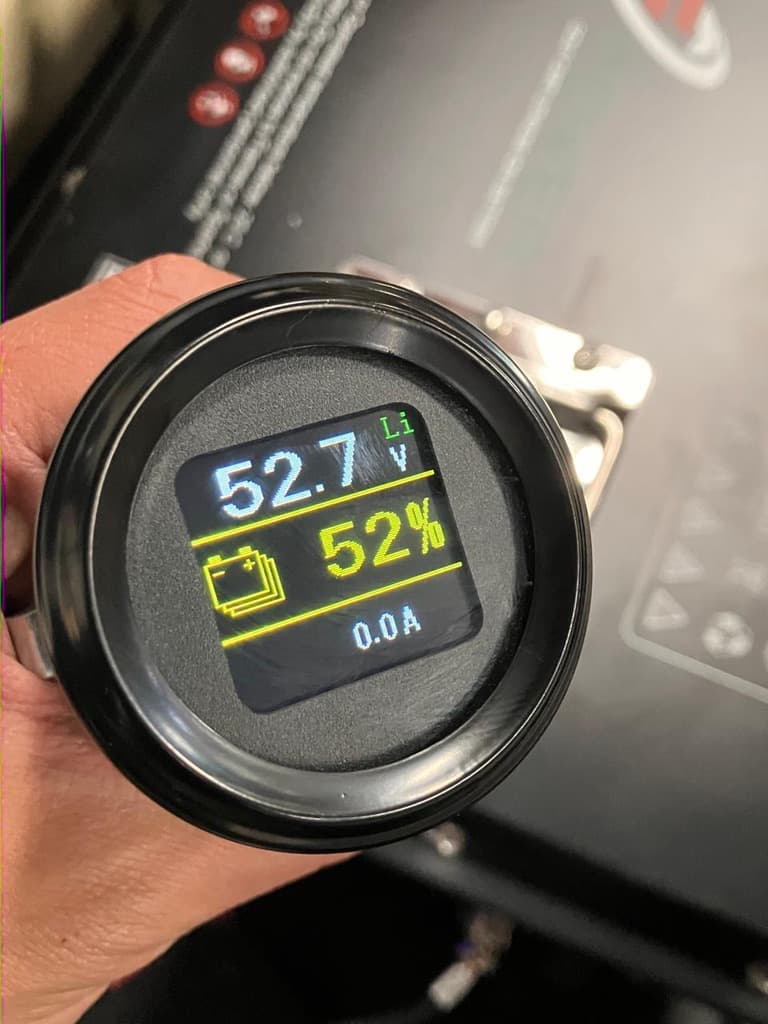
Always know how much ride time you have left
One of the frustrations with lead-acid is the unreliable state-of-charge readout. Voltage drops non-linearly, so the gauge is often wrong.
With the MG Power LiFePO4 system, the round digital gauge shows real-time percentage, voltage and current. On hole 12 you can see you have 52% charge and plan your remaining rounds with confidence.
Before and after: the conversion that transforms your cart
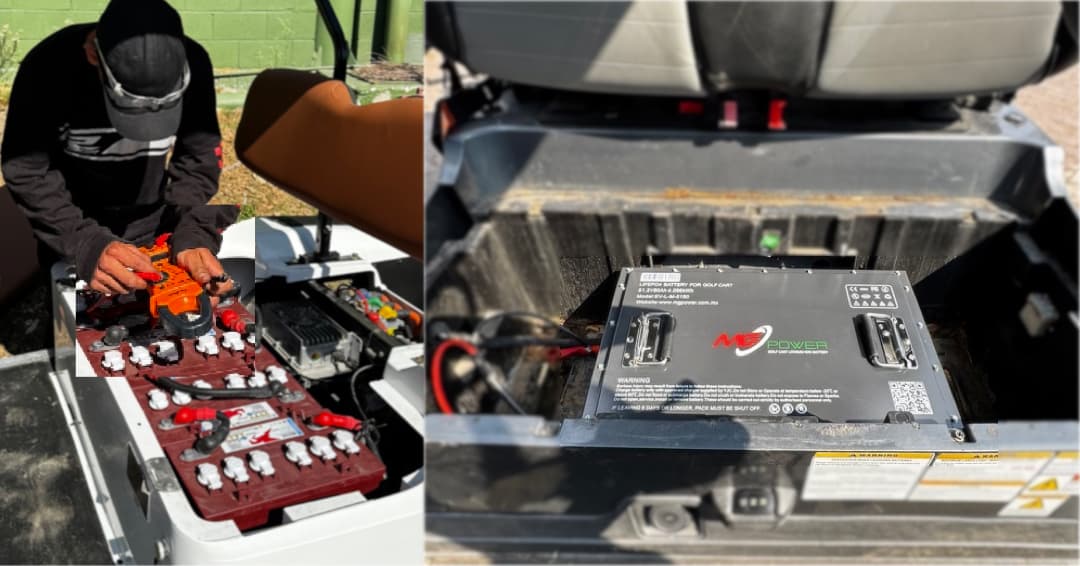
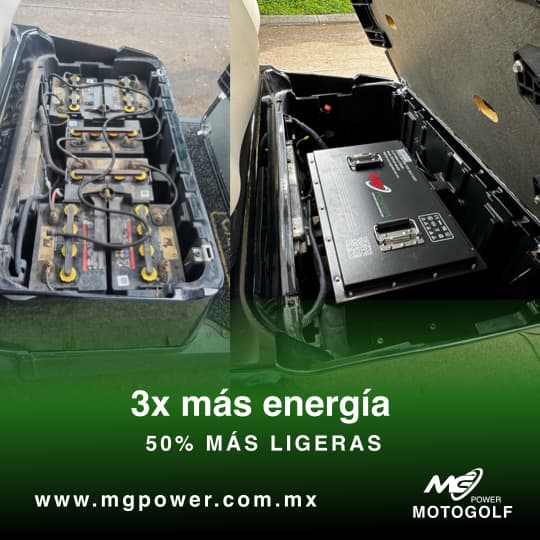
The visual difference is striking: six heavy lead-acid batteries taking up the entire battery bay versus a single compact LiFePO4 pack. Weight drops from 170 kg to just 48.6 kg — a 65% reduction that improves handling, reduces tire wear and makes the cart noticeably more agile on hills.
Installation on most platforms (EZGO, Club Car, Yamaha) takes just a few hours: remove the old batteries, drop in the lithium pack, connect the terminals and CAN bus, calibrate the gauge.
Real total-cost comparison
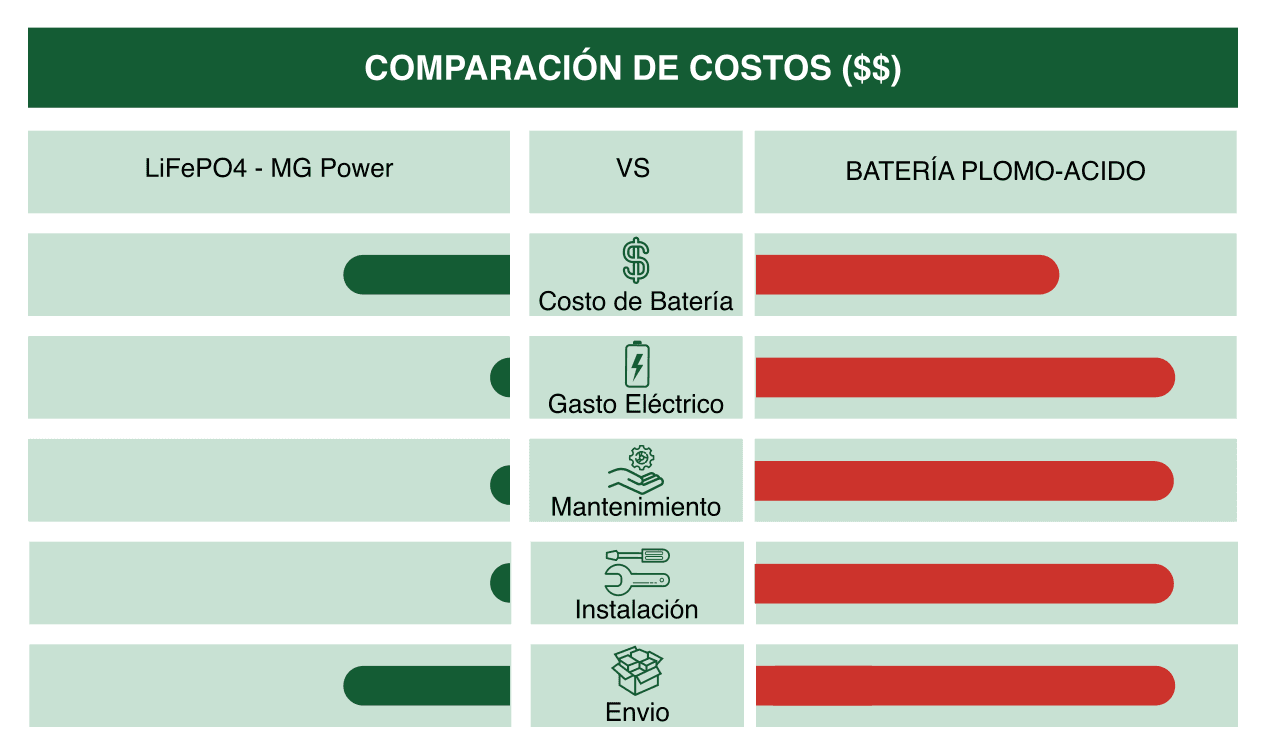
Lead-acid wins on purchase price — that's the only category. When you factor in electricity costs (lithium charges more efficiently), maintenance (zero vs. regular), installation simplicity, and the 4–6 replacement cycles you'll go through with lead-acid before a single lithium pack wears out, lithium wins decisively.
The number that closes the argument: cycle life
A quality LiFePO4 battery delivers 3,500+ full charge cycles. A conventional flooded lead-acid battery rarely exceeds 500 before capacity degrades significantly.
In practice: if you charge daily, lead-acid needs replacing every 1.5 years. Lithium, under the same conditions, lasts more than 9 years. That's 4–6 lead-acid replacement cycles per single lithium pack.
The capacity curve is equally important: lithium holds its charge capacity flat across its entire lifespan. Lead-acid starts degrading from year one, progressively shortening how far you can drive per charge. For fleet operators managing 20–100 carts, this predictability is a major operational advantage.
When does the investment make sense?
If you use your cart regularly (3+ times per week), the conversion pays for itself in under three years when you account for maintenance savings, electricity savings and avoided replacement costs.
For golf course fleet managers, the calculus is even clearer: less downtime, zero battery maintenance, and predictable range that lets you plan operations precisely.
Even for occasional users, lithium has one more advantage: it doesn't sulfate or degrade during long storage periods — something that silently destroys lead-acid batteries left on the shelf.